


Ankle Brace for Running (2026): How to Choose, Fit, and Wear One
Every runner has a version of the same story: the ankle that felt fine at the door and noticeably unsure by mile four. Running is a single-leg balancing act repeated thousands of times, and the ankle is the joint that absorbs the first and last contact of every stride. That is why a well-fitted ankle brace for running has become standard kit for road runners, trail runners, and treadmill regulars alike. This guide covers which styles exist, how each one behaves inside a running shoe, how to size and fit properly, and a simple break-in plan — with every recommendation linked to our own ankle brace collection.
Why Runners Reach for Ankle Support
An ankle is a small set of bones held together by a web of ligaments and moved by tendons running down the calf. In a straight line on flat pavement, it does its job quietly. The trouble shows up when conditions change: a cambered road that rolls the same way for miles, a curb edge in fading light, a rooty trail section, a sudden change of pace, or simply the last two miles of a long run when the calf is tired and the foot starts landing wherever it lands.
A running ankle brace does three practical things. It adds a light, even layer of compression, which most runners describe as a warm, hugged, "switched-on" feeling around the joint. It provides gentle structural feedback, a soft reminder of where the ankle should sit through each stride, especially on uneven ground. And it builds awareness — the same trick a posture cue plays for the shoulders. When something hugs the ankle, you notice how you land, and noticing is half of running well.
What a brace does not do is replace strength, mobility, or sensible training load. Think of it as a partner to your calf raises and single-leg balances, not a substitute for them. If something feels sharp, hot, swollen, or steadily worse, that is a conversation for a qualified healthcare professional — a support garment is a comfort tool, not a diagnosis.
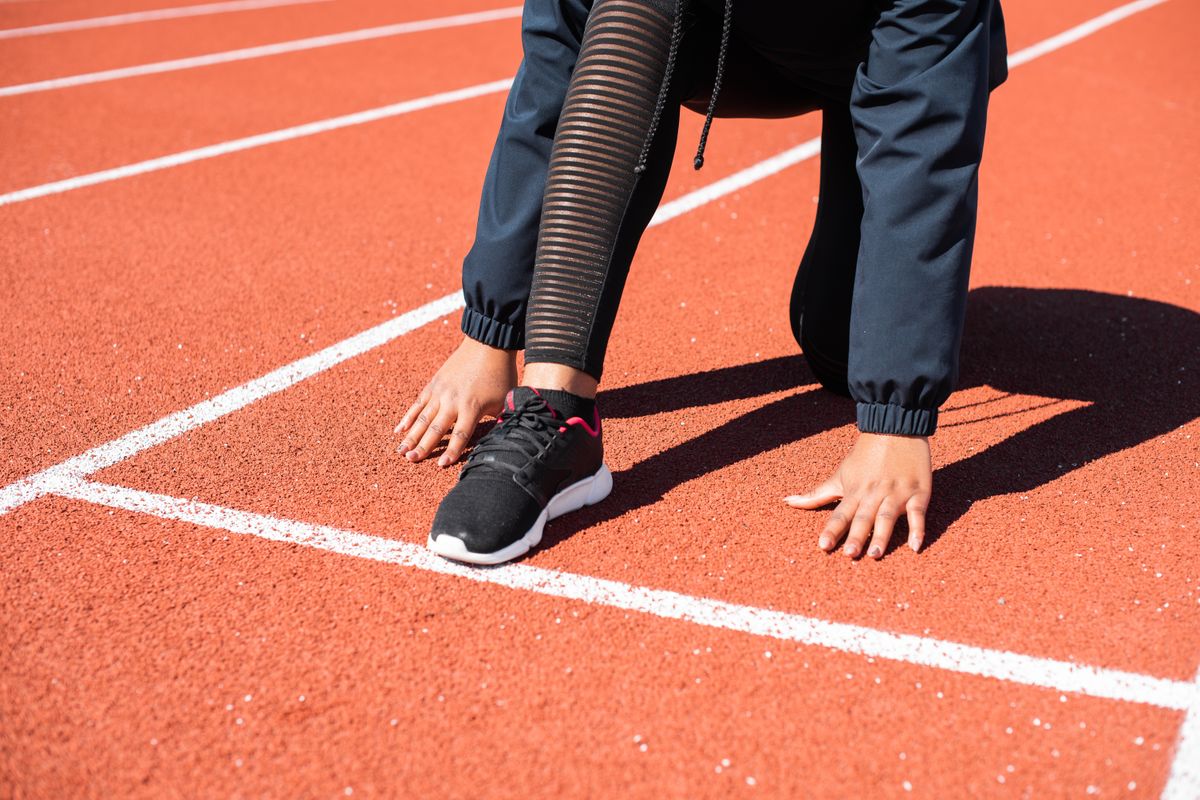
Sleeve, Strap, or Lace-Up: Which Style Fits Your Running?
Running ankle support comes in three broad shapes, and matching the shape to your weekly running matters far more than any brand name on the box.
Compression sleeves — the everyday default
A sleeve is a stretchy knit tube that pulls over the foot and ankle. It is the simplest option for most runners: nothing to strap, nothing to lace, and slim enough to disappear under a sock. Our Copper Ankle Brace with Compression uses a soft copper-blend knit with an adjustable wrap, so you get even compression plus a small amount of dial-in fit. Road runners doing steady easy miles on pavement usually start here, and it doubles nicely as a warm-up layer on cold mornings.
Strap and wrap styles — adjustable, targeted feel
A wrap-style brace uses one or two adjustable bands that cross the ankle and lock the fit where you want it. The advantage is adjustability: snug it for a long trail day, ease it off for a recovery jog. The Knee Brace Compression Sleeve with Adjustable Straps applies the same adjustable-wrap logic further up the leg, and runners who like that level of control often prefer a wrap at the ankle too.
Lace-up and figure-of-eight braces — for trails and uneven ground
If your routes include gravel, roots, cambered shoulders, or technical descents, a lace-up brace with a figure-of-eight panel is worth the extra bulk. It hugs the arch and crosses above the ankle, giving a firmer, more structured feel through sideways movement while still letting the foot flex naturally. Trail runners keep one in the pack for the second half of long days. The same logic appears across our ankle brace collection, and it pairs naturally with knee support for the hills — see the knee brace collection.
How to Size and Fit a Running Ankle Brace
Fit decides everything. A well-chosen style in the wrong size feels wrong within half a mile, so measure before you order.
- Measure the ankle, not the shoe. With the foot flat, wrap a tape around the narrowest part of the ankle just above the ankle bone, then around the instep if the size chart asks for it. Compare to the chart; a "medium" sock is not a "medium" brace.
- Between sizes, go up. Running heats the foot and the ankle swells slightly, so a brace that is borderline tight at the door will bite by mile three. A size up with an adjustable wrap gives you room to fine-tune — which is why an adjustable-wrap ankle brace is the safest first purchase.
- Do the ten-step test. Put the brace on, then walk ten steps and rise onto your toes five times. A good fit stays put through the whole movement without rolling at the heel, bunching under the arch, or cutting in at the top edge.
- Re-check with the shoe on. A brace can feel perfect barefoot and cramped inside a shoe. Lace up, then confirm you can still wiggle your toes and feel the ground through the sole.
What to Look For in the Fabric
Materials matter more than marketing. A running ankle brace lives inside a hot, damp shoe for an hour at a time, so the knit has to breathe and hold its shape.
- Breathable knit over thick neoprene. Airflow keeps the skin dry, and dry skin stays comfortable over long miles.
- Flat, low-profile seams. Raised seams inside a shoe create hot spots. Look for flatlock stitching and smooth edges.
- Anti-slip grip at the heel or sole edge. This is the difference between a brace that stays put and one you stop to re-adjust at every mile marker.
- Four-way stretch. The brace should move with the foot rather than fighting it, which keeps the stride natural.
- Honest sizing range. A brand that publishes measured ankle circumference, not just S/M/L, is a brand you can actually buy from. Our Plus Size Knee Brace with Adjustable Straps follows the same publish-the-measurements principle at the knee.
A Two-Week Break-In Plan
The most common mistake is wearing a brand-new brace for a long run, noticing it rubs, and shelving it forever. Ease in instead.
- Days 1–3: wear it around the house and on a short walk. The only goal is noticing the feel and catching any rubbing early.
- Days 4–7: wear it on your shortest easy run. Check the fit once at the halfway point.
- Week 2: use it on longer runs and any trail or hill day; leave it off for short recovery jogs so the ankle keeps working on its own.
- Ongoing: match the brace to the route — sleeve for flat pavement, wrap for tempo days, lace-up for trails.
Give the brace a wash before the first wear if the knit feels stiff, and wash it again after every sweaty run. A clean knit holds its compression and stays comfortable, while a salty one stiffens and chafes.

Matching the Brace to Your Terrain
Running surfaces ask different things of an ankle, and the brace should answer the question your route is actually asking.
- Road and pavement: repetitive, predictable, often cambered. A slim compression sleeve is usually enough, and it layers neatly under a sock.
- Track: consistent and flat, but the turns load one ankle over and over. A light sleeve plus disciplined warm-up covers most runners here.
- Treadmill: forgiving surface, but the belt never varies, so the same tissues do the same work for the whole session. Rotate the brace in on longer sessions and keep the ankle free on short ones.
- Trail and gravel: the widest range of movement. A lace-up or figure-of-eight brace with light side support earns its place, especially on descents.
The Rest of the Running Support Chain
An ankle never works alone. It sits at the bottom of a chain that runs through the foot, the knee, the hips, and the lower back, and supporting one link often changes how the others feel.
Start at the ground: supportive insoles change how force travels up through the arch and ankle, which is why many runners pair a brace with arch support insoles or the cushioned orthotic insoles for long shifts — browse the full insoles collection to match arch height. Above that, tired knees on longer runs are common, and a knee compression sleeve or the knee brace with side stabilizers keeps the middle link of the chain comfortable over big mileage weeks. Runners who feel a pull at the front of the knee on hills often add a patellar support strap for tempo days.
At the top of the chain, long-run fatigue often shows up as a slumped lower back in the final miles. A lower back support brace from the back brace collection helps on long days, and desk-shaped shoulders from the working week respond well to the posture corrector collection. Runners who grip handles, carry bottles, or type all day sometimes also use copper wrist compression sleeves (see the wrist sleeve collection) for everyday comfort, and a 2-in-1 upper back support brace rounds out recovery days.
Five Mistakes Runners Make With Ankle Braces
- Buying a brace instead of training. Calf raises, single-leg balances, and hopping drills build the real support system. The brace is the backup, not the base.
- Wearing it 24/7. Muscles and ligaments get stronger by doing their own work. Use the brace for running and long days, then take it off at home.
- Ignoring the shoes and socks. A worn-out midsole changes every stride above it, and a bunched sock creates hot spots no brace can fix. Check the shoes before blaming the brace.
- Cranking the straps. Tighter is not safer. A brace that restricts circulation leaves the foot cold and the stride heavy — snug and even always beats tight.
- Never washing it. Salty, stiff fabric chafes. A quick hand wash after every sweaty run keeps the knit soft and the compression even.
Care, Drying, and When to Replace
Hand wash in cool water with a mild detergent, rinse thoroughly, press out the water in a towel, then air-dry flat away from heat. Never machine-dry a knit brace, and never use fabric softener — both flatten elastic fibres and shorten the life of the garment. Rotating two braces extends the life of each and means one is always dry.
You will know it is time to replace when the fabric stays stretched after washing, the top edge frays, the grip at the heel stops gripping, or the brace simply feels flat and loose on the ankle. At that point a new brace is cheaper than compensating with a worse stride.
The Bottom Line for Runners
An ankle brace for running works best when the style matches your terrain, the size matches your ankle, and the brace supports a training plan rather than replacing one. Start with a slim compression sleeve for everyday pavement, step up to an adjustable wrap for tempo days, keep a lace-up brace in the pack for trails, and size honestly using a measured ankle circumference. Build wear time over two weeks, wash the knit after every sweaty run, and think of the brace as a partner to strong calves and steady mileage. Browse the full ankle brace collection to compare styles, and if your runs sit in the middle of a bigger support routine, the knee brace collection covers the next link up the chain.
Frequently Asked Questions About Ankle Braces for Running
Related Reading
IYDoaMea Sport products are designed for everyday comfort and support. They are not a treatment, cure, or medical device, and the best results come from consistent healthy habits. Free shipping applies to all U.S. orders.


